The Evolution of Saffron Trade in 2026
The global saffron market in 2026 reflects a mature trading environment shaped by professional buyers, structured supply chains, and clearly defined quality expectations. Saffron is no longer approached as a seasonal agricultural product, but as a strategic ingredient integrated into food manufacturing, pharmaceutical processing, and premium culinary applications. Within this context, Iranian saffron—particularly Super Negin from Ghaenat—continues to hold a leading position in international trade.
Export pricing in this environment is driven less by short-term market noise and more by structural factors. Buyers seek predictability, traceability, and repeatable quality. These expectations have elevated the role of production discipline, post-harvest handling, and supplier reliability in determining export value.
Quality Consistency as a Pricing Foundation
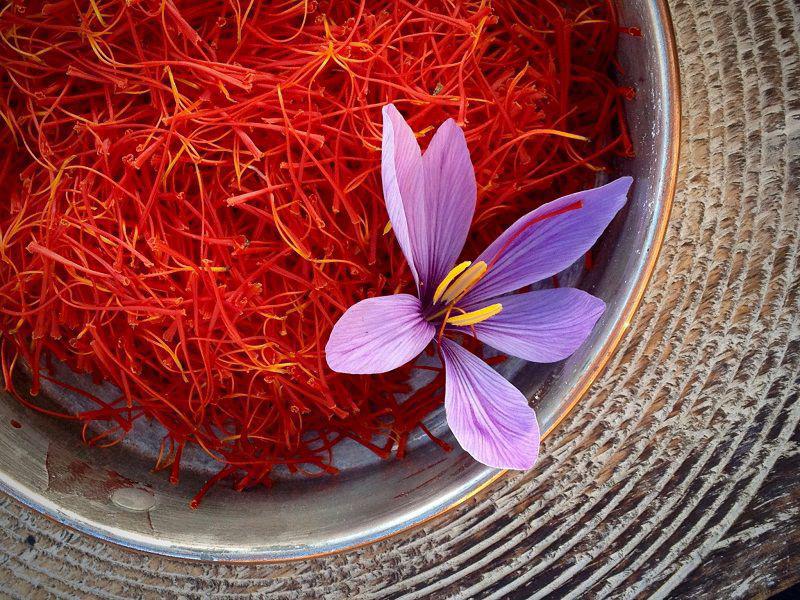
Super Negin Ghaenat is recognized for its long, unbroken red stigmas, minimal style content, and high concentration of coloring and aromatic compounds. These attributes are not merely visual indicators; they translate directly into functional performance during processing and application. For industrial buyers, this performance consistency reduces formulation variability and operational risk.
In 2026, quality is assessed across shipments rather than individual lots. Exporters capable of maintaining uniform specifications over time are perceived as strategic partners rather than transactional suppliers. This perception strongly influences price negotiations, as buyers are willing to prioritize reliability over marginal cost differences.
Origin Confidence and Trade Transparency
The importance of origin has intensified in recent years. Ghaenat, as a recognized producing region, carries commercial significance beyond geographic identification. Buyers associate this origin with established cultivation practices, experienced labor, and historically stable output.
Traceability mechanisms—supported by documentation, laboratory analysis, and supplier reputation—reinforce buyer confidence. In export transactions, confidence in origin reduces due diligence friction, accelerates contracting, and supports premium positioning within competitive markets.
Volume Structure and Contract Logic
Export saffron transactions in 2026 are predominantly structured on a per-kilogram basis and settled in USD. Pricing frameworks often incorporate volume tiers, delivery schedules, and contract duration. Larger commitments do not compromise quality standards; instead, they enable efficiencies in logistics, packaging, and inventory management.
Longer-term supply agreements have become increasingly common. These arrangements provide stability for both exporters and importers, allowing better planning and cost control across the value chain. Within such frameworks, Super Negin Ghaenat functions as a reference grade, simplifying expectation alignment between parties.
Logistics, Storage, and Delivery Reliability
Beyond production, logistics play a decisive role in export value. Proper storage conditions—particularly moisture control and protection from light—are essential for preserving saffron quality over extended periods. Exporters who invest in controlled storage infrastructure are better positioned to supply consistent product throughout the year.
Shipping conditions, insurance coverage, and customs procedures vary by destination and influence overall transaction structure. Experienced exporters integrate these variables into pricing discussions, ensuring that quotations reflect both product integrity and delivery reliability.
Strategic Positioning in Global Markets
In 2026, Super Negin Ghaenat is no longer evaluated solely as an agricultural output, but as a refined input within global supply systems. Its value lies in its ability to meet professional standards repeatedly, across markets and applications.
Export pricing, therefore, represents a balance between scarcity, craftsmanship, and trust. Buyers assess not only what they are paying per kilogram, but what level of operational certainty and brand protection they gain through consistent sourcing.
Why Buyers Choose Super Negin Ghaenat Over Other Grades
How Professional Buyers Evaluate Saffron in 2026
In 2026, saffron purchasing decisions are rarely impulsive. Professional buyers operate within structured procurement frameworks where quality, reliability, and long-term cost efficiency outweigh short-term price considerations. The evaluation process begins with grade differentiation and extends into supply consistency, risk management, and brand protection.
Super Negin Ghaenat frequently emerges as the preferred option within these frameworks due to its predictable performance and standardized characteristics. Buyers increasingly seek saffron that integrates smoothly into production lines, packaging systems, or premium retail offerings without requiring constant adjustment.
Understanding Grade Differences Beyond Appearance
While visual appearance plays an initial role in saffron assessment, experienced buyers quickly move beyond surface evaluation. Grades such as Pushal, Negin, and Super Negin differ not only in thread length or color uniformity, but in functional behavior during use.
Super Negin stands out for its minimal variability. Its longer, intact stigmas and low moisture content allow for controlled dosing, consistent infusion results, and stable flavor extraction. These properties are particularly important for manufacturers and processors who rely on repeatable outcomes.
In contrast, mixed or lower grades may introduce inconsistency that affects final product quality, forcing buyers to compensate through formulation changes or increased usage—both of which raise operational costs.
Risk Management and Cost Efficiency
From a commercial standpoint, the true cost of saffron extends beyond its purchase price. Inconsistent quality can lead to production inefficiencies, rejected batches, or brand reputation risks. In 2026, buyers increasingly calculate total cost of ownership rather than unit price alone.
Super Negin Ghaenat reduces these risks by offering a stable input with well-documented characteristics. This stability simplifies quality control procedures and minimizes uncertainty, particularly in regulated markets where compliance standards are strict.
Supply Reliability and Scaling Capability
Another decisive factor in grade selection is the supplier’s ability to scale volumes without compromising quality. Many buyers start with trial shipments but quickly assess whether the supplier can support larger or recurring orders.
Super Negin sourced from established supply networks in Ghaenat benefits from organized harvesting and processing systems. This infrastructure enables exporters to maintain grade integrity even as order volumes increase—an advantage not always available with fragmented or informal sourcing channels.
Brand Alignment and Market Positioning
For brands operating in premium segments, ingredient choice directly influences market perception. Saffron used in high-end food products, wellness formulations, or luxury packaging must align with the brand’s quality narrative.
Super Negin Ghaenat supports this alignment by offering a clear quality identity and recognized origin. Buyers leverage this consistency to strengthen product positioning and justify premium pricing in their own markets.
Decision Logic in Long-Term Partnerships
By 2026, many saffron transactions are embedded within long-term partnerships rather than spot purchases. Buyers value suppliers who understand their operational needs and can adapt to evolving demand while maintaining quality benchmarks.
Within these relationships, Super Negin functions as a shared reference point. Its standardized profile simplifies communication, reduces disputes, and supports smoother contract renewals. Decision-making thus becomes collaborative rather than transactional.
Comprehensive Insights into Iranian Saffron Export in 2026
Market Overview and Key Global Destinations
Iranian saffron continues to dominate the global market in 2026, not only due to its unmatched quality but also because of its historical reputation and established supply chains. The country supplies over 90% of the world’s saffron, with the Khorasan region—particularly Ghaenat—producing the most sought-after Super Negin grade.
Export destinations have diversified over the years. Traditional markets in the Middle East, such as the UAE, Saudi Arabia, and Qatar, remain strong due to high culinary demand and cultural familiarity. However, European and North American buyers have increasingly entered the market, seeking premium saffron for gourmet food products, pharmaceutical applications, and luxury gift sets.
Emerging Asian markets, including China, Japan, and South Korea, now show increasing interest in high-quality Iranian saffron. This trend reflects rising disposable incomes, growing awareness of saffron’s culinary and medicinal benefits, and demand for consistent, certified products.
In 2026, a clear distinction has emerged between bulk industrial buyers and retail-focused importers. Industrial buyers often purchase in quantities of 10–50 kilograms per shipment, prioritizing grade consistency, documentation, and stable delivery schedules. Retail importers or boutique distributors focus on smaller quantities but place higher emphasis on presentation, packaging, and visual quality.
This segmentation is crucial for exporters. Understanding the type of buyer allows precise adjustment of the product offering, logistics, and commercial terms. Exporters targeting industrial buyers need robust infrastructure for packaging, quality control labs, and transport, whereas those targeting premium retail may focus more on branding, packaging aesthetics, and product traceability.
Price Dynamics and Factors Affecting Export Rates
The pricing of Iranian saffron in 2026 is influenced by multiple interconnected factors. First, grade classification plays a primary role. Super Negin commands the highest price due to its long, intact stigmas, uniform deep red color, and minimal yellow styles. Negin and Pushal grades, while valuable, fetch lower prices due to minor variations in length, color uniformity, and aroma intensity.
Supply and demand fluctuations are another key factor. The harvest volume, influenced by climatic conditions, labor availability, and agricultural practices, sets the baseline for pricing each year. A lower yield or higher labor costs naturally elevate the per-kilogram export price.
Logistics costs, including shipping, insurance, and customs, are increasingly important in total landed cost calculations. In 2026, exporters who invest in reliable cold-chain management, moisture-proof packaging, and insurance coverage can justify premium pricing, as buyers perceive lower risk of quality degradation during transit.
Currency dynamics also play a role. While contracts are predominantly settled in USD, exporters must navigate local currency fluctuations, international transaction fees, and banking regulations. Sophisticated buyers often negotiate slightly flexible pricing models to accommodate volume commitments or long-term contracts, allowing exporters to stabilize revenue despite exchange rate volatility.
Documentation, certification, and compliance add another layer of value. Certificates of analysis, ISO certifications, and organic or halal certifications enhance credibility, reduce customs clearance time, and build buyer trust, particularly for first-time importers. Super Negin Ghaenat consistently achieves top marks in these areas, reinforcing its position as the preferred export grade.
Choosing the Right Grade: Super Negin vs Other Grades
Selecting the correct saffron grade depends on the buyer’s application. Super Negin is the benchmark for premium culinary, pharmaceutical, and luxury uses. Its long threads, high crocin content (color intensity), and safranal concentration (aroma) make it ideal for infusion, food coloring, and therapeutic products.
Negin grade is suitable for bulk food industry applications where aesthetic uniformity is slightly less critical but color strength and aroma remain important. Pushal, with shorter or partially broken stigmas, is mostly used for processed products, industrial flavoring, or markets with budget-sensitive demand.
For buyers, the total cost-effectiveness of Super Negin often outweighs its higher per-kilogram price. Fewer losses during processing, predictable infusion strength, and reliable performance in finished products result in lower operational risk and long-term savings.
Quality Assurance and Traceability Measures
In 2026, buyers expect more than just visual inspection. Quality assurance protocols are crucial to validate grade, chemical composition, and moisture content. Leading exporters implement laboratory testing to measure crocin, safranal, and picrocrocin levels, ensuring that Super Negin meets consistent specifications across shipments.
Traceability extends to the farm level. Digital records of harvest, drying methods, and storage conditions provide buyers with transparency, mitigate risk, and enhance confidence. Many European and North American importers now require full documentation before first shipment, integrating it into compliance checks and internal quality systems.
Packaging also plays a role in quality preservation. Airtight containers, light-proof material, and controlled moisture levels protect the product during transport. Exporters that maintain these standards can justify premium pricing and reinforce brand reputation.
Long-Term Partnerships and Supply Agreements
In modern saffron trade, establishing long-term supply agreements has become a standard practice. Buyers favor predictable sourcing with agreed-upon quality and quantity over sporadic spot purchases. Such arrangements allow exporters to plan production, optimize harvest schedules, and invest in quality infrastructure while buyers secure reliable supply chains.
Super Negin Ghaenat often forms the basis of these agreements. Its consistent characteristics reduce negotiation friction, facilitate contract renewals, and simplify operational planning. Buyers and exporters alike benefit from mutual predictability, which ultimately strengthens commercial relationships and encourages market expansion.
Frequently Asked Questions (FAQ) – Part 1
Q1: Why is Super Negin Ghaenat more expensive than other grades?
A: The price reflects its longer threads, uniform color, higher crocin and safranal content, and minimal broken styles. These features reduce operational risk, ensure consistent results, and maintain brand reputation.
Q2: Can Super Negin be used for both culinary and medicinal purposes?
A: Yes. Its chemical composition makes it suitable for infusion in food, beverage, therapeutic extracts, and pharmaceutical applications.
Q3: How does traceability affect export pricing?
A: Documented traceability reduces buyer risk, accelerates customs clearance, and allows exporters to justify premium rates because the product’s origin and quality are verified